A Guide to the Tech, Apps, and Gear We Use in the Arena
“A warrior is only as good as their preparation.”
Below is a list of the tools we use here in The Arena to track stats, fuel, progress and recovery.
Important: You do NOT need to download or buy all of these. These are simply my recommendations if you are looking for the right tool for the job. Start simple, and upgrade your loadout as you level up.
Nutrition Tracking
Arena-Approved:Cronometer
Why we use it:
Best micronutrient tracking on the market
Transparent database
Excellent for plant-forward eaters and athletes
Encourages awareness, not obsession
Best for: Clients who want accuracy and education, not guesswork.
Alternatives
MyFitnessPal – Huge database, easier UI, but weaker micronutrient accuracy
MacroFactor – Smart coaching algorithms, excellent for advanced macro work
Lose It! – Simple and beginner-friendly, limited depth
Workout Tracking
Arena-Approved:Hevy
Why we use it:
Clean, intuitive logging
Excellent strength progression tracking
No bloat, no nonsense
Doesn’t try to be your coach (that’s our job)
Best for: Strength training and structured programs.
Alternatives
Strong – Very similar to Hevy, slightly less modern feel
Trainerize – Useful for coach-built plans, heavier interface
Fitbod – Auto-generated workouts; convenient but less intentional
Tracking Hub + Social
Arena-Approved:Strava
Why we use it:
Gold standard for cardio + endurance logging
Social accountability without cringe
Excellent integration with wearables
Perfect for Arena challenges and visibility
Best for: Runners, cyclists, hybrid athletes, and community momentum.
Alternatives
Nike Run Club – Great coaching cues, limited beyond running
Garmin Connect – Powerful data, weak social experience
MapMyRun – Solid basics, dated feel
Trail Activity
Arena-Approved:AllTrails
Why we use it:
Best trail discovery and reviews
Elevation, difficulty, and conditions at a glance
Essential for trail runs, hikes, and outdoor exploration
Best for: Anyone leaving pavement on purpose.
Alternatives
Komoot – Excellent route planning, more complex UI
Gaia GPS – Advanced mapping, overkill for most clients
Trailforks – Great for mountain biking, narrower scope
Body Scanning
Arena-Approved:ZOZOFIT
Why we use it:
Consistent, visual body measurements
Tracks shape change, not just scale weight
Powerful feedback without mirror obsession
Best for: Progress tracking when the scale lies.
Alternatives
MeThreeSixty – Good free option, less precise
InBody – Accurate but location-dependent
DEXA – Gold standard, expensive and infrequent
Wearable
Arena-Approved: Garmin
Why we use it:
Industry-leading accuracy
Excellent endurance + recovery metrics
Durable, athlete-first design
No lifestyle fluff pretending to be training data
Best for: Hybrid athletes, runners, and serious consistency.
Alternatives
Apple Watch – Best smartwatch, weaker training depth
WHOOP – Recovery-focused, subscription required
Fitbit – Accessible, limited for advanced training
Meditation / Mindfulness
Arena-Approved:Headspace
Why we use it:
Beginner-friendly without being fluffy
Excellent stress, sleep, and focus tracks
Clean structure (no spiritual rabbit holes)
Best for: Busy brains that need calm, not complexity.
Alternatives
Calm – Strong sleep content, softer tone
Waking Up – Deep philosophy, not beginner-friendly
Insight Timer – Massive library, zero curation
Habit Tracking
Arena-Approved:Daylio
Why we use it:
Fast, frictionless habit logging
Mood + habit correlation = insight
Encourages reflection without journaling fatigue
Best for: Building awareness without overwhelm.
Alternatives
Habitica – Gamified, fun, but easy to ignore
Streaks – Minimalist, Apple-centric
Notion – Powerful, but only if you already live there
The Best Apps / Wearables are the ones you will actually use, so if you have a tried and true favorite that isn’t here, keep on using it!
The Level Up! Arena Clothing Guide
The options for clothing are infinite, so we aren’t going to get into favorite styles or brands here. If you want some specific suggestions, don’t be afraid to ask your coach directly. This guide will be more of an overview of what gear works best for specific activities.
Gear Guide - Shoes
Footwear
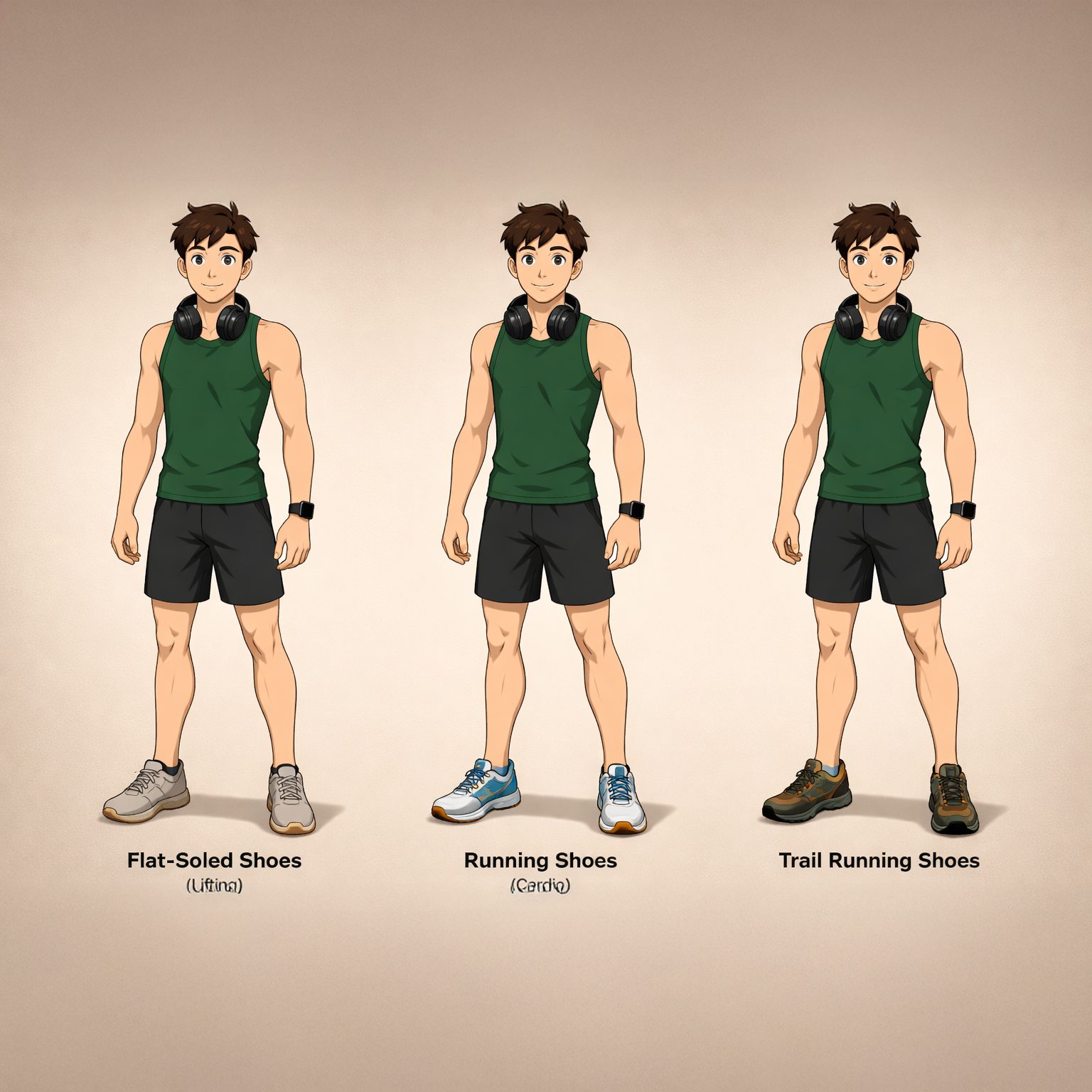
Arena-Approved: Activity-specific footwear
Why this is the standard:
Different activities place different demands on your feet. One “do-everything” shoe usually does everything poorly. Injury risk drops when footwear matches terrain and load.
Lifting: Flat, stable sole
Running: Cushioned, stride-appropriate shoe
Trail: Grip + protection
Other Alternatives
Cross-training shoe – Acceptable if space or budget is limited
Minimalist shoe – Only if you already have foot strength and experience
Walking shoe – Fine for light activity, not for loaded training
Bottoms
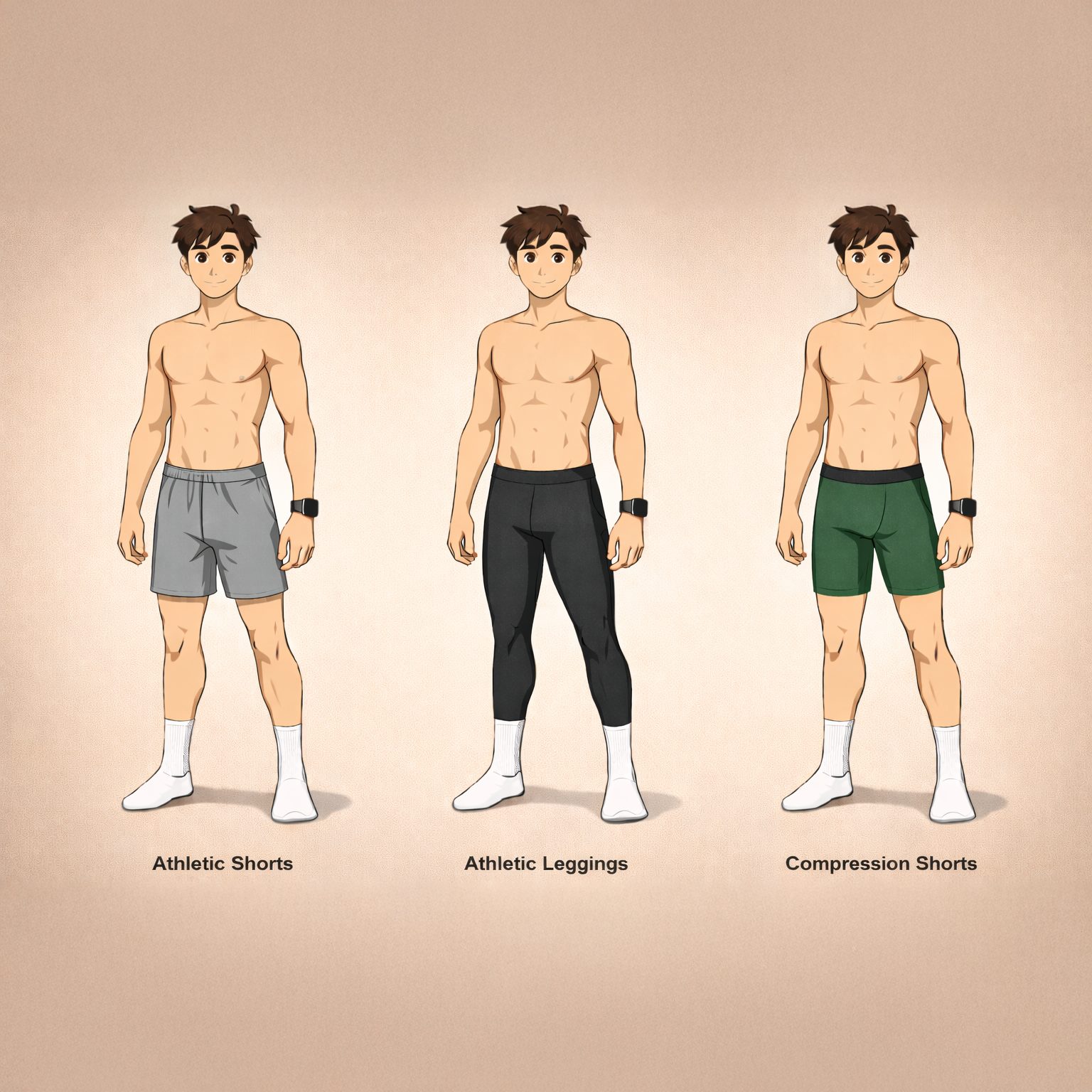
Arena-Approved: Athletic shorts or leggings that allow full range of motion
Why this is the standard:
No restriction at hips or knees
No constant adjusting
Encourages confidence in movement
Options
Compression shorts/leggings – Great for support and layering Hybrid shorts (liner built-in) – Convenient, fewer layers Athletic shorts (length: above the knee) – All around good option, okay for cardio, good for lifting Running shorts (built-in brief) – Minimalist, offers great support Sweats/Joggers – Okay when necessary due to weather, but not ideal.
Gear Guide - Bottoms
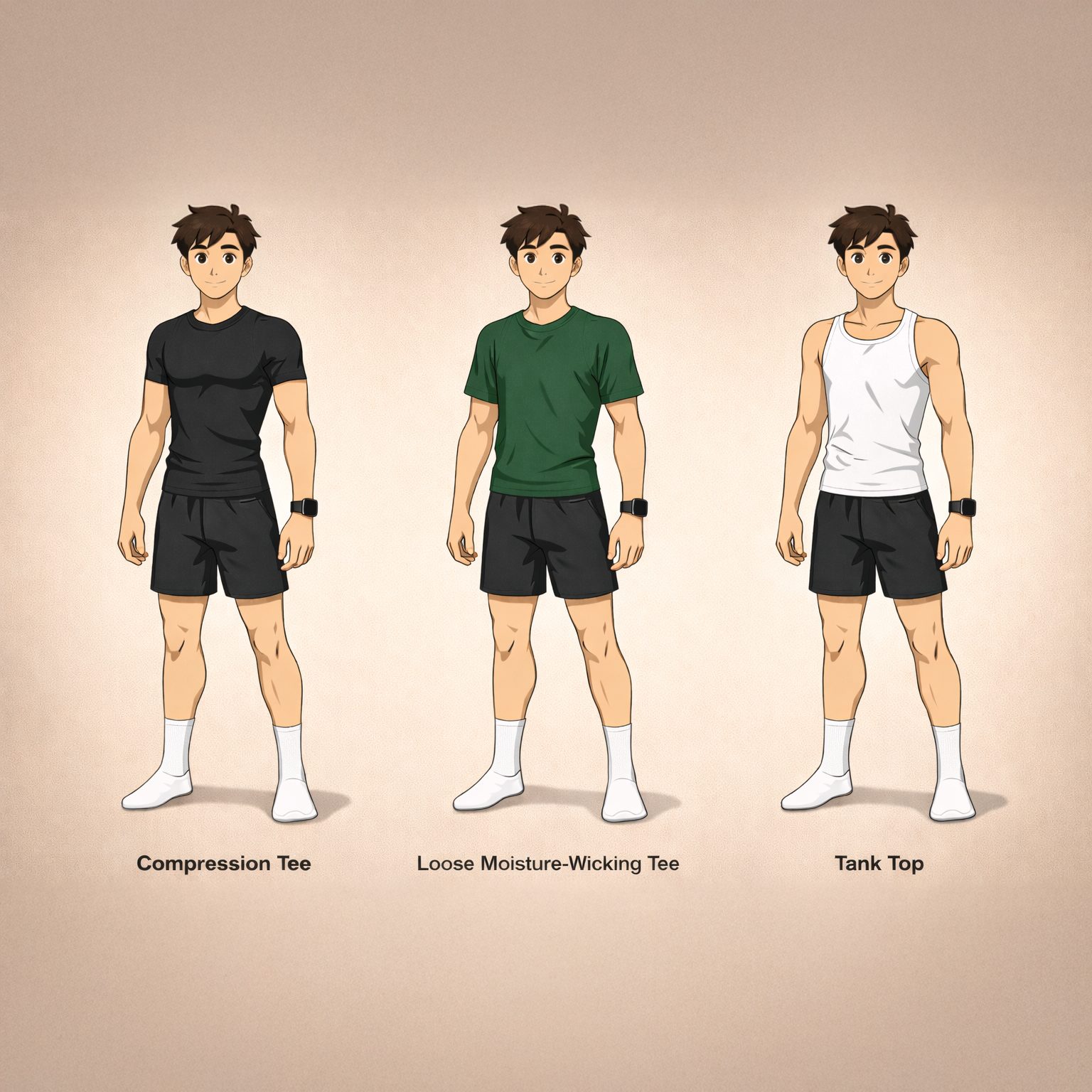
Gear Guide - Tops
Tops
Arena-Approved: Lightweight, moisture-wicking athletic fit
Why this is the standard:
Breathable
Doesn’t trap sweat
Doesn’t restrict shoulders or spine
Options
Tee/Tank/Sports Bra – The standard, good for most activities
Compression top (long or short sleeve) – Useful for colder gyms or sensory preference
No top – If appropriate
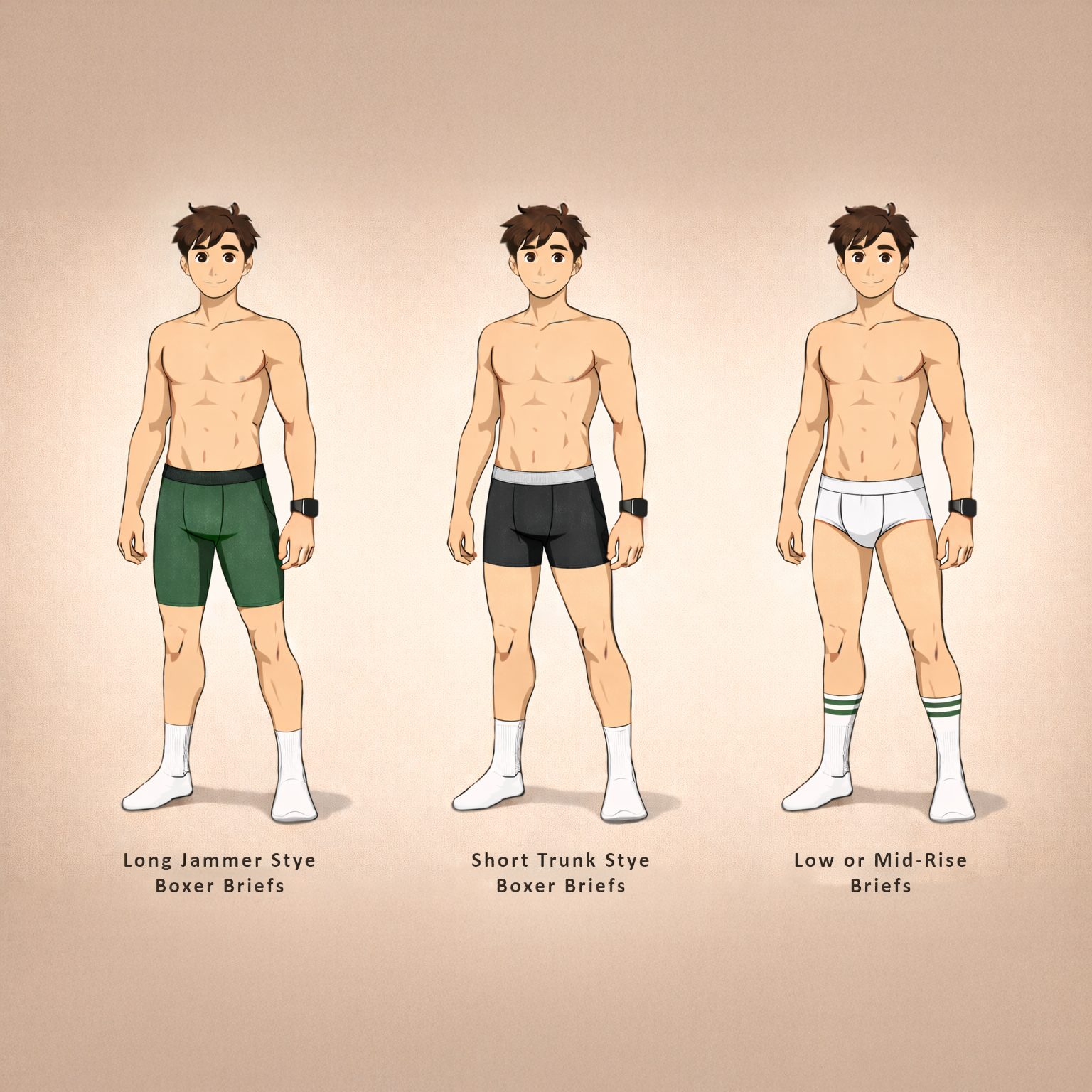
Base Layers (The unseen but vital layer)
Arena-Approved: Athletic Synthetic Material
Why this is the standard:
Reduces chafing
Improves comfort during long sessions
Stays in place under movement
Lets you forget it exists (highest compliment)
Key characteristics
Moisture-wicking fabric
Flat seams or seamless construction
Snug but not restrictive fit
No cotton for long or sweaty sessions
If you notice it during training, it’s the wrong choice.
Options
Briefs – low or mid-rise, less coverage, best mobility
Trunks – More coverage than briefs, but short enough that they don’t stick out below athletic shorts
Boxer-Briefs – Longer, more coverage
Thong – Minimalist
Jockstrap – Great under unlined running shorts
Gear Guide - Underwear
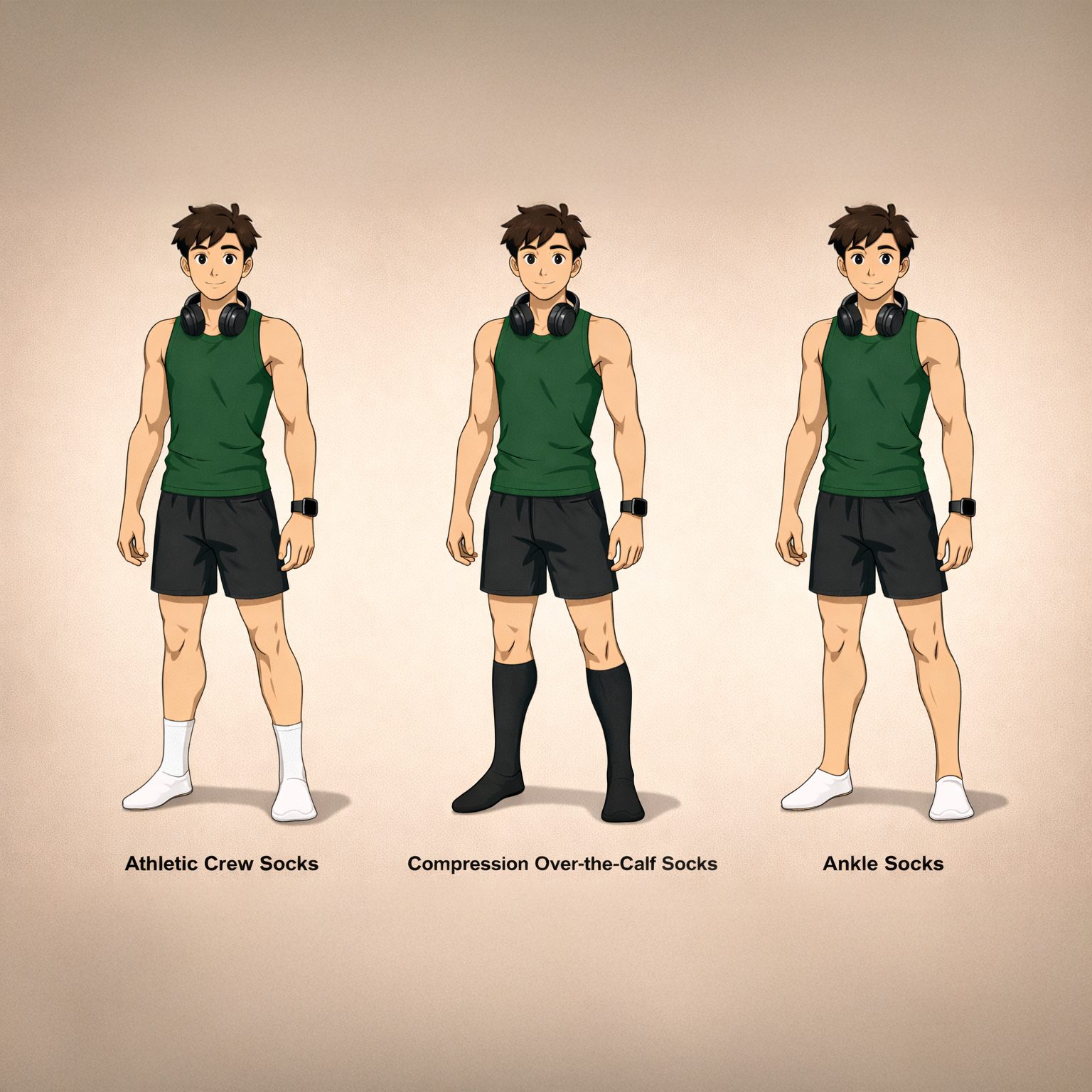
Gear Guide - Socks
Socks
Arena-Approved: Athletic crew socks with moisture-wicking synthetic material
Why this is the standard:
Prevent blisters
Protects shins on deadlifts and trail work
Stable feel inside the shoe
Avoid 100% cotton unless you enjoy blisters, chafing, and damp sweat-filled socks.
Alternatives
Compression socks – Above the calf, great for endurance or recovery
Ankle socks – Mainly use if you just prefer the style more than crew socks
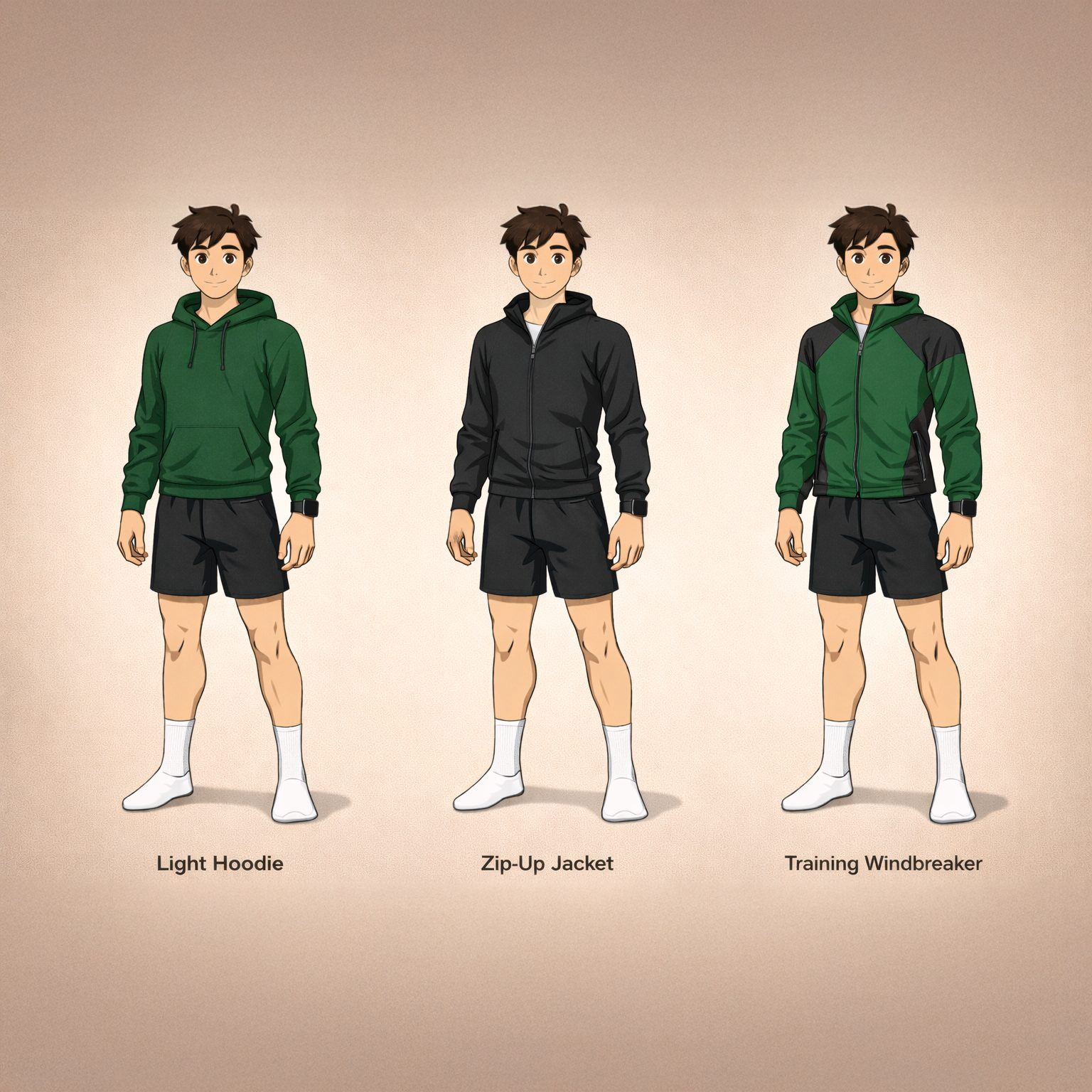
Layers
Arena-Approved:Lightweight and Easy to Shed
Why this is the standard:
Keeps joints warm
Easy on/off
Doesn’t interfere with movement
Options
Lightweight hoodie – simple, classic.
Zip-up Jacket – better for quick removal
Windbreaker – Best when weather requires it
Gear Guide - Outerlayer
No need to rush out and buy new clothing to get started.
If you have something comfortable, safe and functional, then you are good. We upgrade as needed.